

The bathroom is where many falls at home happen. Wet floors, low toilets and stepping over a tub wall all add up. The right equipment makes the bathroom safer and easier to use, whether you are recovering from surgery, managing a long-term condition or helping a loved one stay independent at home. Below is what we carry, the key measurements, and how to choose the right fit.
Measurements and weight capacities below are for the models we currently stock. Always choose equipment rated for at least the user's weight.
Shower chairs
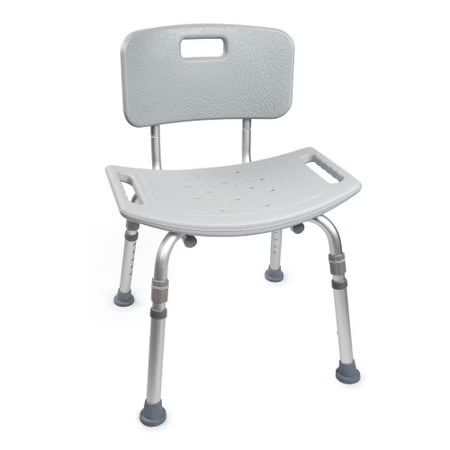
A shower chair, also called a bath bench, sits inside the tub or shower so you can bathe seated. We carry models with and without a backrest. A backrest gives more support, while a backless chair takes up less room and makes it easier to reach.
How to size a shower chair
- Seat height: sitting on the chair, your feet should rest flat on the tub or shower floor with your knees bent about 90 degrees.
- Measure the floor of your tub or shower. The chair's legs need to sit flat on the floor, not on a sloped edge.
- Set all four legs to the same height and check that each button clicks fully into place.
| Shower chair | Measurement |
|---|---|
| Seat height | 15.5"–19.5", adjustable |
| Seat size | 19.25" wide × 11.5" deep |
| Footprint (outside the legs) | 19.5" × 19.5" |
| Weight capacity | 300 lb |
Transfer benches
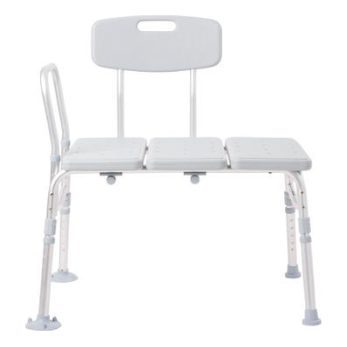
A transfer bench straddles the tub wall, with two legs inside the tub and two outside. You sit down outside the tub, slide across the seat, then lift your legs over. It is the safest choice for anyone who has trouble stepping over the tub edge.
How to set up a transfer bench
- Place the bench with two legs inside the tub and two on the bathroom floor. Set the backrest on the side that lets you face the faucet when seated.
- Adjust the legs so the seat is level. The inside legs often need a different setting than the outside legs because the tub floor is lower.
- Seat height: sitting on the bench, your feet should rest flat on the floor with your knees bent about 90 degrees, and the seat should sit at or above the top of the tub wall.
- Check the space beside the tub. The bench extends past the tub wall onto the bathroom floor.
| Transfer bench | Seat height | Seat size | Capacity |
|---|---|---|---|
| Standard | 17.5"–22.5" | 26" wide × 18.5"–19.5" deep | 400 lb |
| Bariatric (heavy duty) | 18.25"–23.25", in ½" steps | 26.5" wide × 16.5" deep | 500 lb |
Raised toilet seats
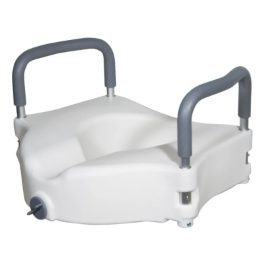
A raised toilet seat adds height to your toilet so you have less distance to lower yourself and stand back up. It is one of the most helpful items after a hip or knee replacement.
How to choose a raised toilet seat
- Measure your toilet bowl from the seat bolts to the front edge of the bowl. About 16.5" is a round (standard) bowl and about 18.5" is elongated.
- Measure from the floor to the back of your knee, then measure your toilet's seat height. The difference is roughly how much height you need. Most people do best with their hips level with or slightly above their knees when seated.
- Choose arms if you need help pushing up to stand.
| Raised toilet seat | Height added | Fits | Capacity |
|---|---|---|---|
| Standard, 4" | 4" (seat 14" wide × 16" deep) | Standard round bowls, not elongated | 400 lb |
| With removable arms | 5" (18" between arms) | Most toilets | 300 lb |
| Bariatric, locking | 4.25" (seat 14.5" wide × 16.63" deep) | Round and elongated bowls | 500 lb |
Toilet safety rails
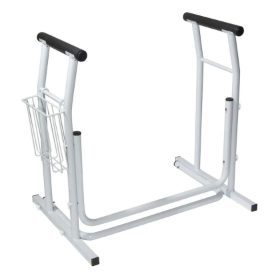
Toilet safety rails give you sturdy armrests on both sides of the toilet to push off from. Bolt-on rails attach with the toilet seat bolts, while a freestanding frame stands around the toilet on its own legs.
Choosing toilet safety rails
- Check the width between the arms against the user's hip width.
- Bolt-on rails fit most standard toilets and stay put. A freestanding frame works when you can't remove the seat bolts.
- Our 3-in-1 commode can also be used over the toilet as a safety frame. See Home Care Equipment.
| Toilet safety rail | Width between arms | Fit | Capacity |
|---|---|---|---|
| Bolt-on rails | 21"–24", adjustable | Toilet seat heights 13.5"–17.5" | 250 lb |
| Freestanding frame | 21" | Most toilets | 300 lb |
Common questions
What height should a shower chair be?
Sitting on the chair in the tub or shower, your feet should rest flat on the floor with your knees bent about 90 degrees. Our shower chairs adjust from 15.5 to 19.5 inches.
What is the difference between a shower chair and a transfer bench?
A shower chair sits entirely inside the tub or shower. A transfer bench straddles the tub wall, so you can sit down outside the tub and slide across without stepping over the edge.
How much height does a raised toilet seat add?
Our raised toilet seats add between 4 and 5 inches, depending on the model.
Will a raised toilet seat fit my toilet?
Most fit standard round bowls, and some also fit elongated bowls. Measure from the seat bolts to the front edge of the bowl. About 16.5 inches is round and about 18.5 inches is elongated.
Do you carry bariatric bathroom safety equipment?
Yes. We carry a bariatric transfer bench and a bariatric raised toilet seat, both rated to 500 lb.
Do you bill insurance?
Not yet. We are working on it. For now, bathroom safety equipment is available for retail purchase.
Find the right fit in Belgrade
Bathrooms come in every shape and size. Bring a few measurements with you, like your tub wall height, tub floor width and toilet seat height, and we'll help you choose the right equipment. Stop by 312 W Main St, Suite 9 in Belgrade or call 406-414-6868.