

The right mobility equipment makes it easier to get around safely, whether you are recovering from surgery, managing a long-term condition or helping a loved one stay independent. Proper fit matters just as much as the equipment itself. A walker or cane at the wrong height can strain your back, shoulders and wrists and make a fall more likely. Below is what we carry and how to size each item.
If your doctor or physical therapist gave you specific settings, follow their instructions. The guidelines below are general.
Rollators
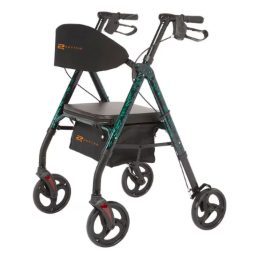
A rollator is a four-wheel walker with hand brakes and a built-in seat, a good fit for anyone who can walk steadily but needs to rest along the way. We carry steel, lightweight aluminum and bariatric models.
How to measure for a rollator
- Wear the shoes you use most often and stand up straight with your arms relaxed at your sides.
- Measure from the floor to the crease of your wrist. This is your handle height.
- Holding the handles, your elbows should bend slightly, about 15 to 20 degrees. Raised shoulders mean the handles are too high. Leaning forward means they are too low.
- Choose a rollator whose handle range includes your handle height.
- Seat height: sitting on the rollator, your feet should rest flat on the floor with your knees bent about 90 degrees.
What to look for
- Weight capacity. Always choose a rollator rated for at least the user's weight. Our standard models are rated to 300 lb and our bariatric models to 400 lb.
- Seat width and backrest comfort if you plan to sit often.
- Overall weight and how easily it folds for the car.
- Always lock the brakes before sitting down, and never push or ride a rollator while someone is sitting on it.
Two-wheeled walkers
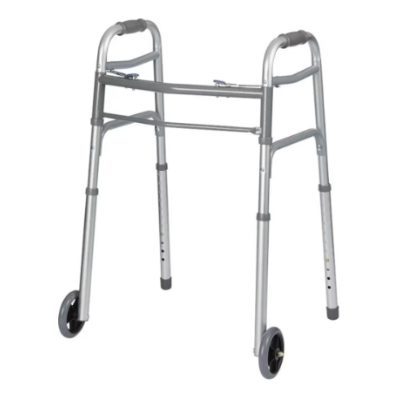
A two-wheeled walker has wheels on the front legs and glides on the back. It offers more support than a rollator and is the walker most people use after a hip or knee replacement.
How to adjust a walker
- Stand up straight inside the walker in your everyday shoes, arms relaxed.
- The handgrips should line up with the crease of your wrist.
- Holding the grips, your elbows should bend about 15 to 20 degrees.
- Set all four legs to the same hole and make sure each button clicks fully into place.
Using a walker safely
- Stand inside the walker, between the back legs, rather than pushing it out in front of you.
- Move the walker first, then your weaker leg, then your stronger leg.
- To stand up, push off the armrests of your chair, then reach for the walker. Never pull yourself up with it.
- Replace worn glides so the walker slides smoothly on carpet and rough floors.
Canes
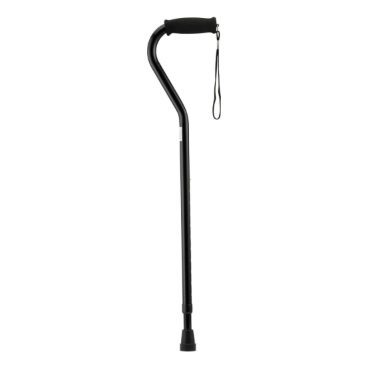
A cane is the lightest option for anyone who needs a little extra balance. We carry offset, folding and quad canes, plus replacement tips.
What height should a cane be?
- Stand up straight in your everyday shoes with your arms relaxed at your sides.
- The top of the handle should line up with the crease of your wrist.
- When you grip it, your elbow should bend about 15 to 20 degrees.
Most canes adjust in one-inch steps. If you fall between two settings, choose the one that keeps that slight bend in your elbow.
Which hand should hold the cane?
Hold the cane in the hand opposite your weaker or injured leg, and move it forward together with that leg. If your right knee is the sore one, the cane goes in your left hand.
Choosing a cane
- Offset canes center your weight over the shaft and are the most common choice.
- Quad canes have a four-point base for extra stability and stand on their own.
- Folding canes are easy to keep in a car or bag.
Replace the rubber tip when the tread is worn smooth or cracked.
Knee scooters
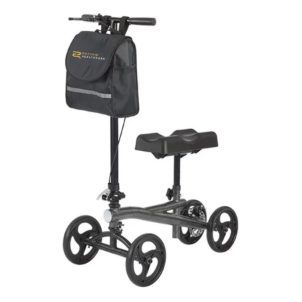
A knee scooter, also called a knee walker, lets you rest your injured leg on a padded platform while you push with the other. For foot and ankle injuries, it is much easier on your arms and shoulders than crutches.
How to set up a knee scooter
- Stand on your good leg in your everyday shoe.
- Bend your injured knee to about 90 degrees.
- Set the knee pad just below your knee so your thigh is straight up and down and your hips are level. Your standing knee should have a slight bend.
- With your knee on the pad, set the handlebar at about wrist height so you can stand tall with a slight bend in your elbows.
A pad that is too high tilts your hips and strains your lower back. A pad that is too low leaves you leaning on the handlebar.
Knee scooter safety
- Rest your knee on the pad, not your foot.
- Use the hand brake to slow down, especially on slopes and ramps.
- Set the parking brake before getting on or off.
- Use extra caution on gravel, snow and ice.
Wheelchairs & crutches
We carry standard wheelchairs in 14", 16", 18" and 20" seat widths, along with footrests and accessories. Bring the user along if possible so we can check seat width in person.
We also carry underarm and forearm crutches with replacement pads and tips. Crutches are height-adjustable, and we will set them for you.
How to size crutches
- Underarm crutches: stand straight in your usual shoes. The top pad should sit about two finger-widths (1.5" to 2") below your armpit, and the hand grip should be level with your wrist crease.
- Holding the grips, your elbows should bend slightly, about 15 to 30 degrees. Put your weight through your hands, not your armpits.
- Forearm crutches: set the hand grip at wrist-crease height with your arm relaxed at your side.
| Crutch | Your height |
|---|---|
| Underarm, youth | 4'6"–5'2" |
| Underarm, adult | 5'2"–5'10" |
| Underarm, tall adult | 5'10"–6'6" |
| Forearm, adult | About 5'0"–6'2" |
Common questions
Can I try mobility equipment before I buy it?
Yes. Rollators, walkers, canes and knee scooters are on our showroom floor in Belgrade so you can try them in person, and we will adjust your equipment before you leave.
What height should a cane be?
With your arms relaxed at your sides, the top of the cane should line up with the crease of your wrist. When you hold it, your elbow should bend about 15 to 20 degrees.
How do I measure for a rollator?
Stand up straight in your everyday shoes and measure from the floor to the crease of your wrist. That is your handle height. Sitting on the rollator, your feet should rest flat on the floor with your knees bent about 90 degrees.
How high should a knee scooter be?
Set the knee pad so your injured knee rests on it at about 90 degrees with your thigh straight up and down and your hips level. Set the handlebar at about wrist height.
Do you carry bariatric mobility equipment?
Yes. Our bariatric rollators are rated to 400 lb. Call us at 406-414-6868 to check current stock.
Do you bill insurance?
Not yet. We are working on it. For now, mobility equipment is available for retail purchase.
Get fitted in Belgrade
Measurements get you close, and trying equipment in person gets it right. Stop by 312 W Main St, Suite 9 in Belgrade and wear the shoes you use most. If you are shopping for someone else, bring them along or bring their height and the measurements above. Questions? Call 406-414-6868.